
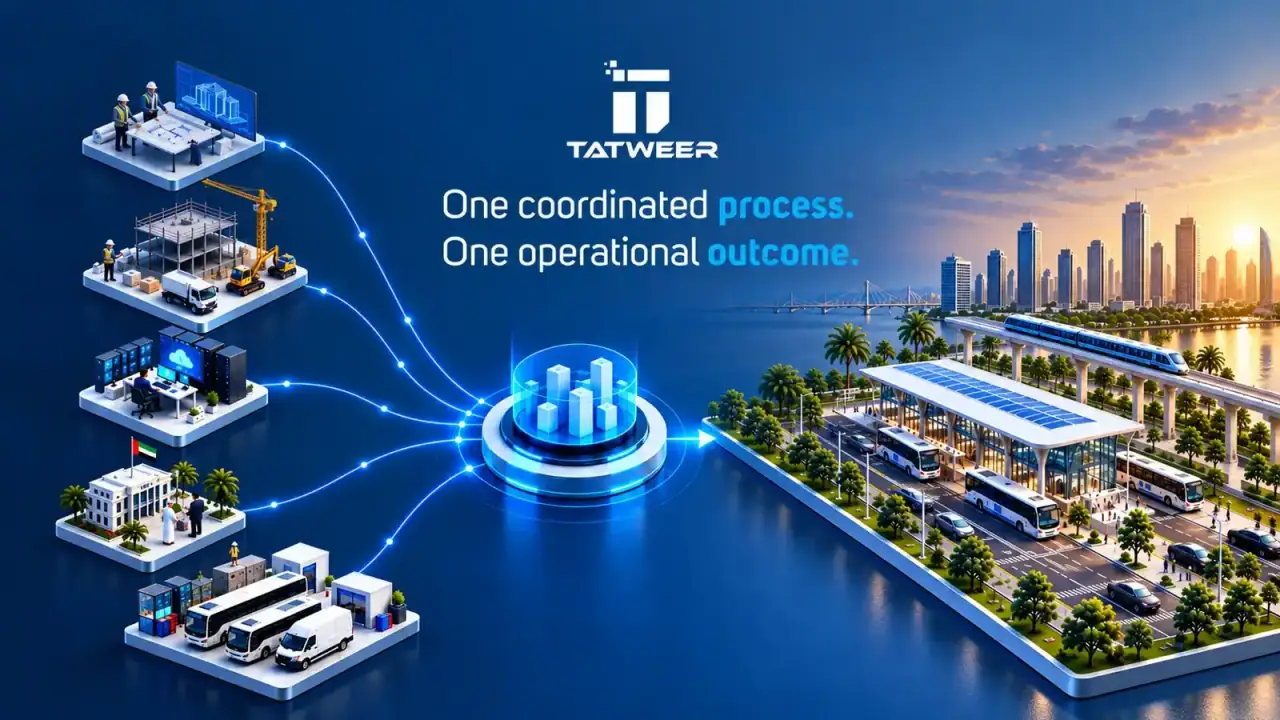
An Integrated Approach to Program and Project Management for Urban Infrastructure and Technology Programs
Most turnkey programs do not fail on site or in the codebase. They fail in the gaps between disciplines: the interface no one owned and the decision no one made in time.
Turnkey delivery promises a fully operational, ready-to-use solution at handover, whether for urban infrastructure or a digital platform. Fulfilling that promise requires more than technical expertise; it demands an integrated program and project management approach that connects planning, procurement, commissioning, go-live, and operational readiness.
With multiple disciplines, contractors, technology partners, authorities, regulators, and systems involved, a single coordination weakness can place the entire program at risk on a construction site or during system integration.
Based on lessons from complex infrastructure and technology programs, these are the pillars that underpin every successful delivery:
Start With a Clear Scope
Requirements, interfaces, responsibilities, acceptance criteria, and handover conditions: all defined before a single foundation is poured or a single sprint begins. Ambiguity here doesn't stay contained. It resurfaces later as design revisions, procurement delays, scope creep, cost growth, and disputes. Scope shouldn't stop at handover: access, maintenance, training, documentation, cybersecurity, system integration, and future expansion all belong in the earliest design decisions, for a building as much as for a platform.
Build One Integrated Delivery Plan
Design. Approvals. Procurement. Construction or development. Testing. Commissioning or deployment. These aren't isolated work packages. They're interdependent, and the plan has to show it: milestones, decision points, resource needs, approval periods, lead times, testing sequences. A schedule that looks good on paper but ignores dependencies isn't progress. It's risk, pushed downstream. Regular reviews catch slippage early, from a civil works delay to a failed integration test, while there's still time to act.
Govern With Clarity and Accountability
Decisions move fast when authority is clear: who approves designs, accepts changes, resolves technical issues, and signs off on completion, on-site or through a change control board. Dashboards and reports should drive action, not just record it: cost, schedule, procurement, risk, quality, and open decisions, visible to everyone who needs them. Every action needs an owner and a date. Without that, small issues sit unresolved until they hit construction, testing, or go-live.
Manage Interfaces and Stakeholders Deliberately
Civil works, utilities, and electrical systems. APIs, data exchanges, and digital platforms. Networks, field equipment, and operational teams. Every connection between them is a potential point of failure. Interface registers, coordinated design reviews, and structured technical workshops resolve conflicts on paper before they surface on site or in production. Stakeholder engagement with authorities, utilities, operators, communities, contractors, vendors, and end users should also begin early. Identifying their requirements upfront helps prevent late objections, approval delays, and last-minute rework.
Control Risk, Cost, and Change: Actively
Risk management isn't a one-time exercise. Threats need to be identified, assessed, mitigated, and tracked continuously, across approvals, site conditions, supply chains, system integration, contractor and vendor performance, and operational readiness. Costs must be tied to the approved scope and work breakdown structure, so forecasts and actuals remain accurate, whether for steel deliveries or cloud infrastructure spend. When change is necessary, it must follow the approved process. Informal changes, whether a construction variation or an unapproved code deployment, can quietly undermine turnkey contracts.
Embed Quality, Safety, and Compliance from the Start
Quality lives in design reviews, material or code approvals, inspections, testing, and documentation, not in a final check before handover. Nonconformities and defects get recorded, investigated, corrected, and closed. Every time. QHSE and information security aren't parallel workstreams. They shape construction methods, workforce coordination, data protection, and commissioning from day one, whatever the asset.
Plan Commissioning and Handover from Day One
Handover isn't an administrative step at the end. It's designed from the start: how systems are tested, integrated, commissioned, and accepted, for a facility or a platform going live. Operational readiness means more than physical or functional completion: as-built drawings or system documentation, O&M manuals, warranties or licenses, software configurations, spare parts, staff training, and support arrangements. This is the moment a completed project becomes a working asset: a building people use, or a platform people rely on.
One Connected Lifecycle
Scope, governance, schedule, cost, procurement, risk, stakeholders, quality, and commissioning must operate as one. Managed separately, they create gaps; managed together, they deliver results across urban infrastructure and technology platforms.